
Da Nang street food is easiest to enjoy when you choose a few local dishes and one food area rather than trying to chase a long “must-eat” list across the city. For a first visit, we would start with a noodle dish such as Mi Quang or bun cha ca, add one snack such as banh xeo or a Central Vietnamese rice cake, then finish with a dessert such as kem bo or che.
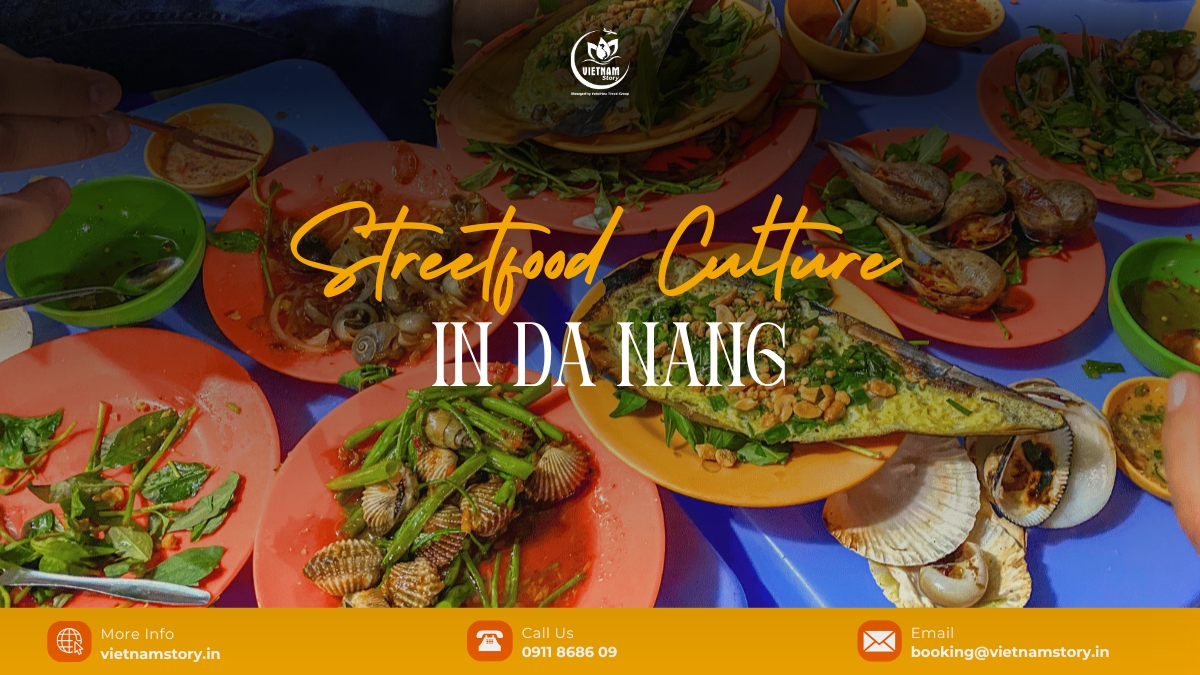
What counts as street food in Da Nang?
Many of Da Nang’s best-known everyday dishes are served from small permanent shops, market counters or simple open-front eateries. The useful distinction is not whether a dish is literally sold from a cart; it is whether you are looking for quick, local, relatively informal food that people eat as part of everyday city life.
That matters because a traveller searching only for roadside carts can miss dishes that are better experienced in a specialist noodle shop or market stall. It also means you can adjust the experience for children, seniors, weather and dietary needs without giving up on local food.
Which Da Nang street foods are worth knowing?

| Dish | What to expect | Useful dietary check |
|---|---|---|
| Mi Quang | Wide rice noodles with a small amount of seasoned broth, herbs, peanuts and rice cracker. Pork, chicken or shrimp versions are common. | Ask about broth, meat/seafood toppings and peanuts rather than assuming a vegetable-looking bowl is vegetarian. |
| Banh xeo | Crisp turmeric-coloured rice-flour pancake, usually eaten with herbs, rice paper and dipping sauce. | Shrimp and pork are common; dipping sauces may contain fish sauce and peanuts. |
| Bun cha ca | Noodle soup with fish cake, often with tomato and pineapple in the broth. | This is a fish-based dish even when the broth looks light and clear. |
| Banh beo / banh nam / banh bot loc | Small Central Vietnamese rice or tapioca cakes with different textures and toppings. | Shrimp, pork, fish sauce or dried seafood toppings are common. |
| Banh mi | Vietnamese baguette with fillings that vary by stall. | Egg, meat, pate and sauces vary; ask for the actual filling rather than relying on the sandwich name. |
| Kem bo | Avocado-based dessert commonly served with coconut ice cream and toasted coconut. | Check dairy/coconut ingredients if allergies or strict dietary rules matter. |
| Che | A broad family of sweet desserts using beans, jellies, fruit, coconut milk and other toppings. | Ingredients differ significantly by version, including dairy, jelly and toppings. |
You do not need to eat every item on this list. A better approach is to choose dishes by texture and appetite: noodle soup if you want a full meal, banh xeo or rice cakes for sharing, and kem bo or che if you mainly want a snack.
Where should you go for street food in Da Nang?

| Area or format | Choose it when | Do not choose it just because |
|---|---|---|
| Con Market | You want many local dishes concentrated in one daytime market experience. | A busy market is not automatically a guarantee of food safety or quality. |
| Bac My An Market area | You want market snacks and desserts, including avocado-based desserts. | One famous snack does not mean every stall is equally good. |
| Son Tra Night Market | You want food browsing combined with the Dragon Bridge area in the evening. | A night market is not the best place for every specialist local noodle dish. |
| Helio / structured evening market | You want seating, entertainment and many choices for a group. | A more organised setting does not necessarily mean a more “authentic” meal. |
| Hai Chau small eateries | You want specialist noodle, rice-cake or local-dish shops in the central city. | You do not need a famous market to eat everyday Da Nang food. |
| An Thuong / My Khe area | Your group wants an easy mix of Vietnamese and international choices near the beach. | It is more useful for variety than for proving you found the city’s “most local” food. |
If you are choosing between Han, Con, Son Tra and other markets, use our Da Nang markets guide. That page owns the broader market comparison; this article stays focused on what and how to eat.
What about seafood?

Grilled squid, shrimp, shellfish and fish appear in markets and beachside areas, but seafood needs its own decision process. A live tank does not prove freshness or food safety, and a crowded restaurant does not guarantee either.
If seafood is one of your main meals, continue to our Da Nang seafood guide for weight-based pricing, preparation styles, raw-seafood cautions and allergy considerations. This page should not duplicate that specialist advice.
Is Da Nang street food safe?
No street-food stall can be guaranteed safe simply because it is popular, busy or used by local residents. Street food can carry food- and water-borne illness risk just like other informal food settings. If you choose to eat it, the practical goal is to reduce avoidable risk rather than look for a visual “guarantee”.

- Prefer food cooked thoroughly and served hot. Avoid food that has been sitting lukewarm for long periods.
- Be more cautious with raw or undercooked seafood, meat and eggs. Acid, lime or vinegar does not make raw seafood equivalent to cooked seafood.
- Be cautious with raw garnishes if your risk tolerance is low. Herbs, cut fruit and uncooked vegetables depend heavily on washing and handling.
- Choose sealed bottled or canned drinks when water quality is uncertain. Do not assume ice is safe because of its shape; use it only when you are reasonably confident it was made from safe water.
- Clean your hands before eating. Soap and water are preferable; alcohol-based hand sanitiser is a useful fallback when handwashing is not available.
- Use extra caution for higher-risk travellers. Young children, older adults, pregnant travellers and people with weakened immune systems may reasonably choose restaurants or fully cooked foods over informal street stalls.
This is deliberately more cautious than the old advice on this page. “Follow the crowd” can help identify a popular stall, but it is not a food-safety guarantee.
Vegetarian, Jain and halal travellers need ingredient-level checks
The word chay is useful when looking for Vietnamese vegetarian food, but asking a normal street-food stall to remove visible meat does not automatically make a dish suitable for strict vegetarian or Jain requirements. Broth, fish sauce, shrimp paste, egg, garlic/onion preferences and shared cooking surfaces can all matter.
For a multi-day Da Nang stay with strict vegetarian or Jain needs, use our Indian and vegetarian food planning guide rather than trying to solve every meal at street stalls. For halal requirements, use the dedicated Da Nang halal food guide and confirm certification or preparation standards directly where needed.
How spicy is Da Nang street food?
Central Vietnamese cooking can use chilli generously, but spice level varies by dish and stall. “Không cay” means “not spicy”; it is useful when ordering, but remember that chilli may already be incorporated into a sauce, broth or prepared filling.
For children or travellers sensitive to chilli, ask before the dish is assembled and keep dipping sauces separate where possible. That is more reliable than trying to remove chilli after serving.
How much street food should you fit into one day?
A food crawl does not need six or eight full portions. We would normally build it as one main dish + one shared snack + one dessert or drink, especially if your day already includes sightseeing.
| Traveller type | Better approach |
|---|---|
| First-time visitor | Mi Quang or bun cha ca + banh xeo or rice cake + dessert. |
| Family with children | One seated specialist shop plus one market snack; avoid repeated stall-hopping if children are tired. |
| Older travellers | Choose seating and shorter walking distances over a long night-market crawl. |
| Strict dietary needs | Use street food selectively for clearly understood items and plan main meals at suitable restaurants. |
| Food-focused traveller | Split exploration across lunch and evening instead of eating many heavy dishes back-to-back. |
What does street food tell you about Da Nang?

The useful cultural value is ordinary rather than theatrical: small portions, quick meals, specialist shops that make the same dish repeatedly, market counters used during shopping, and groups sharing plates at low tables. You do not need to label every stall a “hidden gem” to recognise that food is part of everyday social life.
That is also why we would avoid treating street food as a performance designed for visitors. Observe how the stall works, order what you actually want to eat, and leave the broader cultural claims to the experience rather than forcing an “authentic local” narrative onto every meal.
How should a street-food stop fit into a Da Nang itinerary?
Use food to support the route rather than sending the group across the city for every famous dish. A daytime market can fit naturally with central Da Nang; Son Tra Night Market can fit a Dragon Bridge evening; a specialist noodle shop can be a simple lunch between sightseeing stops.
For the wider route, use our Da Nang tour planning page. That is where food stops should be balanced against transfer time, children or seniors in the group, hotel location and the rest of your Central Vietnam itinerary.
Travelling with mixed food preferences? Send your dates, hotel area and any vegetarian, Jain, halal, allergy or child-friendly requirements. We can place local-food stops into the route without making every meal a separate cross-city journey.
Da Nang street food FAQs
What street food is Da Nang known for?
Mi Quang, banh xeo, bun cha ca, Central Vietnamese rice cakes, banh mi, che and kem bo are useful dishes to know. You do not need to try all of them; choose according to whether you want a full meal, a snack or dessert.
Is Con Market or Han Market better for food?
If food is the main reason for the visit, we would generally choose Con Market. Han Market is more useful when shopping, souvenirs and packaged food gifts are the priority.
Can vegetarians eat Da Nang street food?
Yes, but strict vegetarians should verify broth, fish sauce, shrimp paste, egg and shared cooking surfaces. Asking to remove visible meat from a standard dish is not the same as ordering a dish prepared as vegetarian from the start.
How can I reduce the risk of stomach problems?
If you choose street food, prefer thoroughly cooked food served hot, be cautious with raw seafood and uncooked garnishes, use sealed drinks when water quality is uncertain, and clean your hands before eating. Popularity alone does not guarantee food safety.