
Ha Long Bay is famous for its dramatic limestone karst seascape: steep towers, islands, caves and sheltered waters experienced most clearly from a boat. Its global reputation is reinforced by UNESCO recognition for both exceptional natural beauty and geological significance. For a broader destination overview, start with our Ha Long Bay guide.

Why Ha Long Bay is famous at a glance
- Limestone karst scenery: steep towers and islands rising directly from the water create the bay’s instantly recognisable landscape.
- UNESCO World Heritage recognition: the wider Ha Long Bay–Cat Ba Archipelago property is recognised for natural beauty and geology.
- Caves and landmark islets: sites such as Sung Sot Cave and Fighting Cock Islet have become visual symbols of the destination.
- Experiencing the landscape from the water: cruising and kayaking let travellers move through the towers, channels, caves and lagoons rather than viewing them from one fixed point.
- Fishing-community and dragon-legend associations: cultural stories add another layer to how the bay is understood and remembered.
The limestone seascape that made Ha Long Bay iconic
The most immediate reason Ha Long Bay is famous is visual. Limestone towers, cliffs and vegetated islands rise from the Gulf of Tonkin, while narrow channels and enclosed water continually change the view as a boat moves through the bay. The landscape is therefore experienced as a sequence of changing perspectives rather than one single postcard viewpoint.
Why UNESCO recognises its beauty and geology
The current World Heritage property is recognised under criterion (vii) for exceptional natural beauty and criterion (viii) for geology and geomorphology. The 2023 addition of Cat Ba Archipelago was a significant boundary modification; it did not create a third UNESCO criterion.
For the full meaning of Outstanding Universal Value, criteria (vii)/(viii) and the 2023 change, see our Ha Long natural heritage guide.
Caves and landmark islets people associate with Ha Long Bay
Part of Ha Long Bay’s fame comes from individual landmarks that give names and stories to the wider karst landscape. A few are repeatedly used as visual references for the destination.
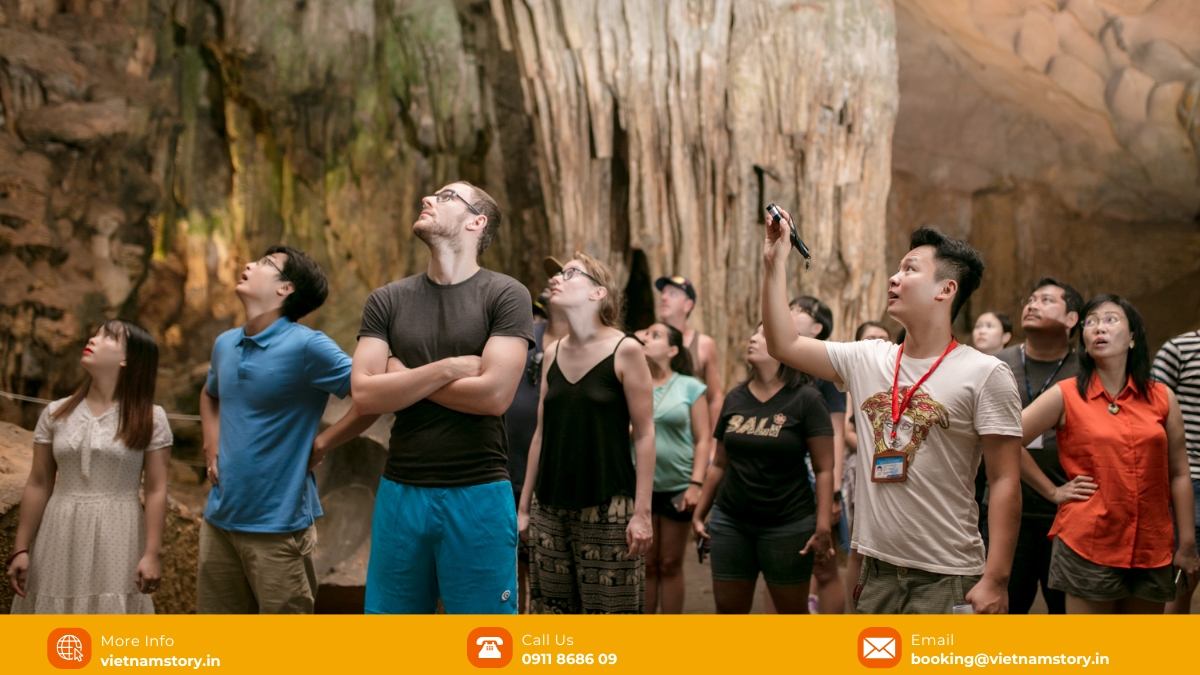
- Sung Sot Cave is one of the best-known show caves visited on Ha Long itineraries.
- Fighting Cock Islet (Hon Ga Choi) is widely used as an instantly recognisable Ha Long landscape symbol.
- Dau Go Cave adds a historical and cultural association to the cave landscape, but detailed legends and historical claims need their own source context.
- Titov Island is another familiar stop, combining a beach area with an elevated viewpoint over the surrounding karst scenery.
Fishing communities and cultural imagery
Ha Long’s reputation is not built on geology alone. Fishing communities, boats, floating structures and working-water traditions have long shaped the cultural image travellers associate with the bay. Modern tourism experiences do not necessarily reproduce historic village life exactly, so it is better to treat these places as living and changing cultural landscapes rather than as frozen “floating civilizations”.

Vung Vieng is one example of that cultural layer. It should not be treated as representative of every community or every part of the bay, but it helps explain why fishing-community imagery remains part of Ha Long’s international identity.
Cruising and kayaking through the landscape
Ha Long is famous not only because of what the landscape looks like, but because travellers can move through it. Cruise routes pass between limestone towers and cave systems, while kayaking on suitable routes can bring you closer to low arches, sheltered water and cliff walls.

Luon Cave is one example where the relationship between water, limestone and a low cave entrance is central to the experience. Actual kayaking access still depends on route and operating conditions on the day.
The “Descending Dragon” legend behind the name
“Ha Long” is commonly translated as “Descending Dragon”. Local legend tells of dragons whose jewels became islands that helped protect the coast. The story is an important cultural association with the bay, but it is folklore rather than a scientific explanation for how the karst landscape formed.
What is the main reason to visit?
If your interest comes from the images that made Ha Long famous, the core experience is seeing the limestone seascape from the water and choosing an itinerary that includes the landmarks or activities you care about. The famous name alone does not tell you whether a particular route, day trip or overnight cruise is the right fit.
If seeing that landscape from the water is the main reason for your visit, compare the routes and durations in our Ha Long Bay cruise collection after deciding which parts of the bay you actually want to experience.