
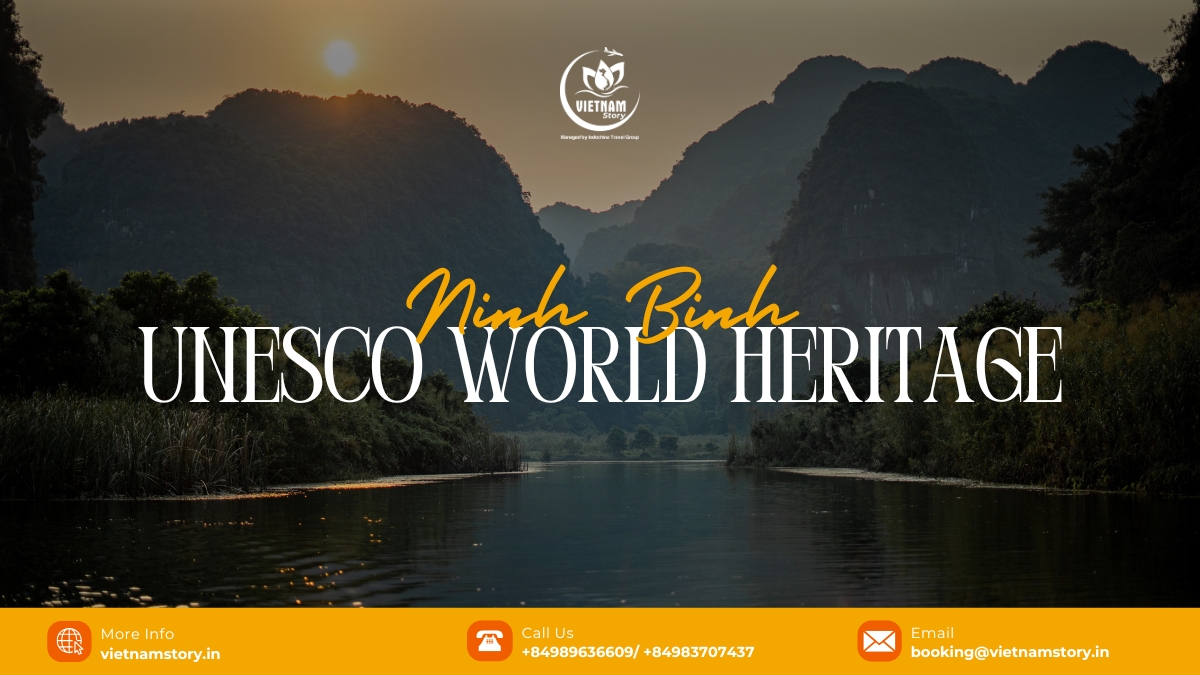
Why Trang An is a mixed UNESCO World Heritage property
When we speak of the Ninh Binh UNESCO World Heritage site, we mean the Trang An Landscape Complex, inscribed in 2014. As of 2026, it is Vietnam’s only UNESCO property listed as both cultural and natural.UNESCO lists Trang An under criterion (v) for evidence of how people adapted to major environmental and landscape changes over more than 30,000 years, and criterion (vii) for the exceptional scenic qualities of its tower-karst landscape, waterways and cave systems. That is why this page treats nature, archaeology and historic Hoa Lu as parts of one heritage story rather than separate attractions.Natural value: tower karst, valleys and waterways
Trang An lies near the southern margin of the Red River Delta. Its defining landscape is a network of limestone towers, enclosed valleys and waterways connected by cave passages.That physical setting matters because the natural landscape and the archaeological record are closely linked. If you want the current visitor experience on the water rather than the heritage explanation, use the Trang An boat-tour guide.
Cultural and historical value
The cultural story includes the Hoa Lu Ancient Capital. In the 10th and 11th centuries, Hoa Lu served as Vietnam’s capital under the Dinh and Early Le dynasties. Its location within the karst landscape is part of the wider relationship between settlement, defence, belief and terrain that gives Trang An its mixed heritage value.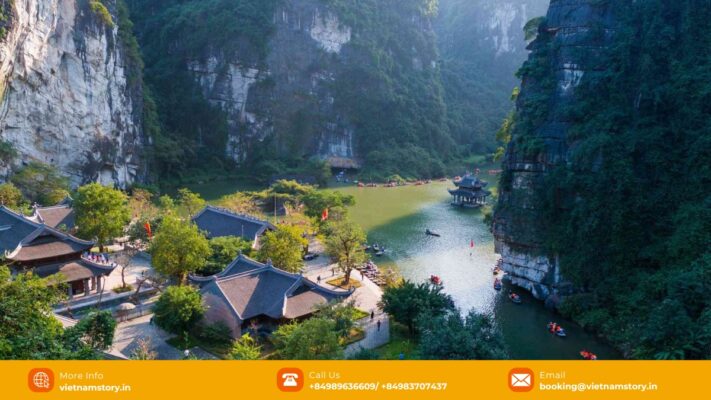
How the UNESCO complex fits into a Ninh Binh trip
The Trang An Landscape Complex is broader than one boat tour. It includes natural and cultural components across the Ninh Binh area, so we keep this guide on the heritage context and move to the relevant practical guide when the question becomes transport, weather or attraction planning.- Getting from Hanoi: use our Hanoi to Ninh Binh transport guide for current train, limousine and car trade-offs.
- Same-day route: use the Ninh Binh day-trip guide to decide whether Trang An, Tam Coc, Hoa Lu or Mua Cave fits together in one day.
- Season choice: if your dates are flexible, use our Best Time to Visit Ninh Binh guide for the broader travel-window decision. If your month is already fixed, use the weather-by-month guide for heat and rain context. Heavy rain can also temporarily change or stop boat routes, so check current attraction status close to travel.
The boat tour’s role inside the Trang An heritage complex
The Trang An boat tour is one of the main ways visitors experience the waterways, caves and spiritual sites within the complex, but this heritage page should not duplicate volatile ticket, route and operating details.For the current 2026 ticket price, four boat-route choices, route duration and operating-status note, continue to our Trang An boat tour guide. We keep those fast-changing visitor details there while this guide stays focused on why the wider landscape has mixed natural and cultural World Heritage value.
Key places connected to the wider heritage landscape
The wider heritage landscape includes several cultural and scenic places, but each has a different planning role.Hoa Lu Ancient Capital: the historical layer
Choose Hoa Lu if you want the historical layer of the landscape. The temples associated with Emperor Dinh Tien Hoang and Le Dai Hanh help explain why this area mattered politically before modern Ninh Binh developed around it.Mua Caves (Hang Mua): a separate viewpoint climb
Mua Cave is a separate viewpoint stop near Tam Coc. The climb is close to 500 steps and suits travellers who want a higher view over the Ngo Dong River and surrounding karst landscape.Tam Coc – Bich Dong: a separate river-and-pagoda area
Tam Coc is a separate boat area on the Ngo Dong River, with Bich Dong Pagoda nearby. Rice-field appearance changes with season and farming conditions, so do not build the visit around a guaranteed green or golden landscape. Use the Tam Coc guide for current route and ticket details.Bai Dinh Pagoda: a separate large Buddhist complex
Bai Dinh is a large Buddhist complex near Trang An and works as a separate religious and architectural stop. If temple and pagoda visits matter to your route, continue to our Ninh Binh pagoda guide rather than treating every spiritual site as part of the same visit.If you are choosing what to do next rather than studying the heritage context, continue to our things to do in Ninh Binh guide.
Practical rules for visiting a protected heritage landscape

- Follow current route and safety instructions: boat routes can change with water level and weather.
- Dress for both outdoors and temple stops: light clothing and sun protection are useful, with modest coverage when entering spiritual sites.
- Do not assume cash-only: payment arrangements can change by attraction and service; carry some VND but check the current method for the ticket or service you are buying.
- Protect the site: stay within visitor areas, keep noise low at spiritual sites and do not leave litter.
If weather will decide your day, use the Ninh Binh weather guide. For restaurant choice, use our Ninh Binh restaurant guide rather than treating food as part of the UNESCO definition.