
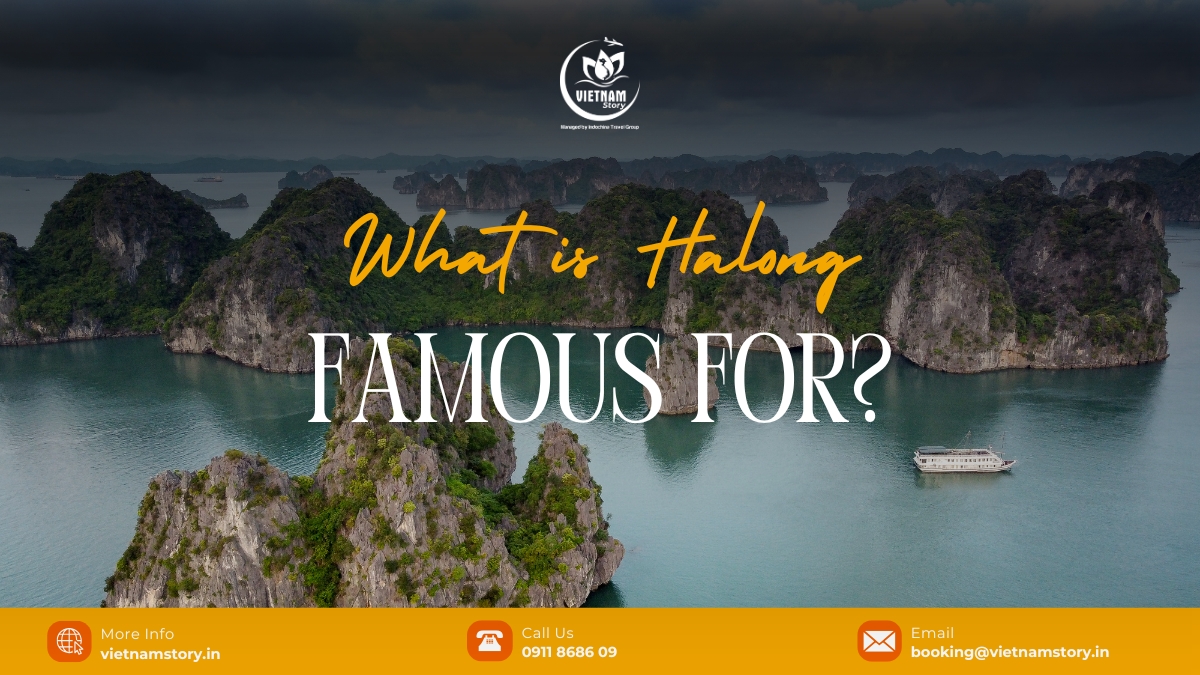
Ha Long Bay remains Vietnam’s crown jewel – a maritime maze of nearly 2,000 limestone islets rising from emerald waters. While its beauty is world-renowned, its fame is rooted in a rare triple-crown of UNESCO recognitions and a geological history spanning 500 million years. At Vietnamstory, we go beyond the “postcard view” to help our Indian travelers discover the legends, the science, and the hidden corners of this natural masterpiece.
The UNESCO “Triple Crown”: A global rarity beyond aesthetic beauty
The primary reason why Ha Long Bay sits at the top of every travel list is its status as a site of “Outstanding Universal Value.” It isn’t just a local favorite, it is a protected heritage of all humanity. Very few places on Earth can claim to be recognized by UNESCO three separate times for three different reasons.
So, what is Halong Bay famous for in the eyes of the world? It is famous for being a “triple-crown” UNESCO site, recognized for its superlative natural beauty (1994), its 500-million-year-old geological history (2000), and its massive biodiversity expansion including the Cat Ba Archipelago (2023). To understand the sheer scale of this recognition, let’s look at the timeline of why the world watches over this bay:
- 1994: Aesthetic Beauty (Criterion VII): UNESCO first recognized the bay for its “superlative natural phenomena.” For the traveler, this means the sight of thousands of limestone pillars draped in jungle greenery, appearing to float on a mirror of emerald water.
- 2000: Geological Marvel (Criterion VIII): The bay was honored as a “living museum.” It showcases the most mature example of “marine-invaded tower karst” in the world. This is the scientific way of saying that the ocean has “swallowed” a mountain range, leaving only the peaks visible.
- 2023: Biodiversity Expansion (Cat Ba link): The heritage site was recently expanded to include the Cat Ba Archipelago. This protects a massive concentration of 4,910 species. Most famously, it is the only home of the Cat Ba Langur, one of the rarest primates on Earth, with only about 70 individuals remaining in the wild.
READ MORE: Ha Long Natural Heritage: A Guide to the 500-Million-Year-Old Masterpiece
Geological icons and the “Dragon” origins: Where myth meets stone
For Indian guests who grew up with the rich epics of the Ramayana and Mahabharata, the folklore of Ha Long Bay is often the most enchanting part of the trip. We, Vietnamese don’t just see rocks, we see a story of protection and divine intervention. Beyond the science, its legendary origin story as the “Bay of the Descending Dragon” and its collection of iconic islets and caves that look like petrified scenes from a myth.
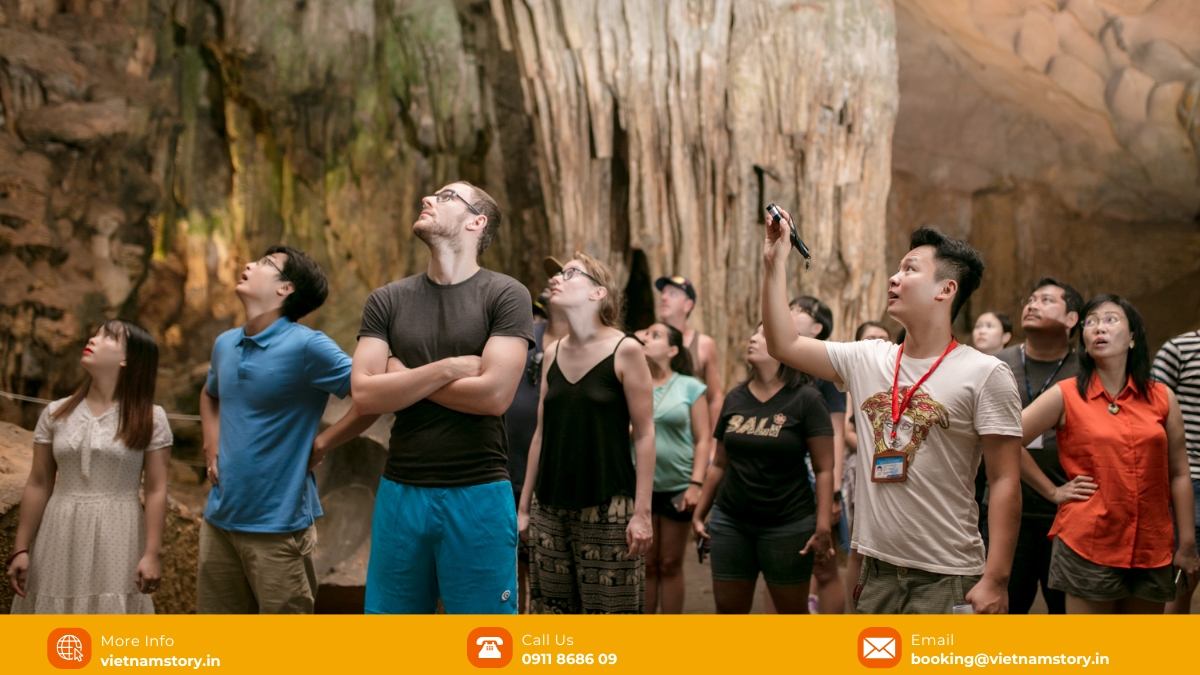
When you cruise through the bay, your guide will point out several landmarks that have become symbols of our nation. Here are the “must-see” geological icons we include in our 2026 itineraries:
Local lore says the bay was created when a mother dragon and her children spat pearls into the sea to form a defensive wall against invaders. Those pearls turned into the islets we see today. This is why “Ha Long” literally translates to “Descending Dragon.”
- Sung Sot (Surprise Cave): Located on Bo Hon Island, this is the bay’s largest cave. It features three massive chambers—the largest of which can hold thousands of people. The stalactites here look like petrified waterfalls, and the colored lighting creates a Bollywood-esque grandeur that our Indian guests love for photography.
- Fighting Cock Islet (Hon Ga Choi): These are two jagged rocks that appear to be “kissing” or “fighting,” depending on your perspective. They are the official symbol of Ha Long tourism and are featured on our 200,000 VND currency note!
- Dau Go Cave (Cave of Wonders): This cave is famous for the 13th-century legend where General Tran Hung Dao hid giant iron-tipped stakes. He used these stakes to sink the fleet of Mongol invaders, making this a site of immense national pride.
- Me Cung Cave (Bewitching Grotto): For the history buffs, this cave contains archaeological evidence of “Soi Nhu” humans dating back 7,000 to 10,000 years. It’s a prehistoric wonder hidden inside a mountain.
Cultural Heritage: The floating world of the sea people
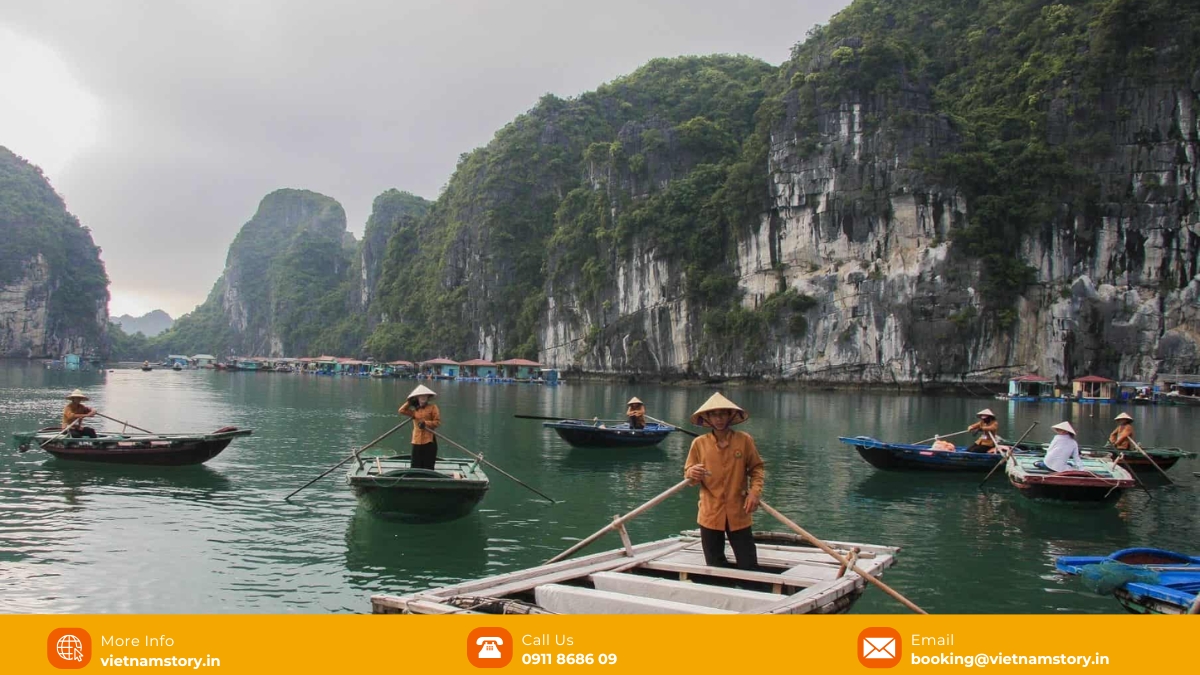
One aspect of Ha Long Bay that truly surprises our visitors is that it is a living, breathing community. For centuries, four traditional fishing villages have called these emerald waters home, creating a unique “floating civilization”. Ha Long Bay is world-famous for its floating villages, where generations of Vietnamese have lived, studied, and traded without ever stepping onto dry land. It is a rare example of human harmony with the sea.
In 2026, the experience of visiting these villages has become more interactive and sustainable. Here is how you can experience this “floating world”:
- Cua Van Floating Village: Voted one of the “16 most beautiful ancient villages in the world” by Journey Quizz, Cua Van features over 300 colorful houseboats anchored in a calm limestone valley. Seeing a child paddle a boat to school is a sight you won’t soon forget.
- Vung Vieng Village: This is the heart of the bay’s pearl industry. Accessible only by passing through the Cao Cave (a natural limestone arch), it feels like entering a secret kingdom.
- 2026 Innovation – Underwater Viewing Tubes: At Vung Vieng, visitors can now use specialized glass tubes to see oyster cages hanging 15 meters below the surface. You can see how the pearls are grown in the cold currents without having to go scuba diving.
- Tung Sau Pearl Farm: At this 30-hectare facility, you can witness the 2-year cultivation process of South Sea pearls. Many of our guests enjoy “extracting” their own pearl – a unique souvenir to take back to India.
Vietnamstory “signature” comparison: Choosing which Bay is right for you
A common mistake is thinking Ha Long Bay is just one single area. In reality, the region is a three-bay system: Ha Long, Lan Ha, and Bai Tu Long. As an expert, Vietnamstory.in always helps our guests choose the one that fits their personality. To help you decide for your 2026 trip, refer to this comparison table we use at Vietnam Story:
| Feature | Ha Long Bay (Center) | Lan Ha Bay (South) | Bai Tu Long Bay (North) |
| Fame level | Global Icon | “Secret” Alternative | Tranquil Escape |
| Crowd level | High (500+ boats) | Low to Moderate | Very Low (Pristine) |
| Highlights | Iconic Caves & Titov Is. | Kayaking & Cat Ba Island | Authentic Fishing Life |
| Vibe | Majestic & Grand | Romantic & Active | Peaceful & Traditional |
| Indian choice | Best for First-Timers | Best for Honeymooners | Best for Seniors/Peace |
If you are a first-time visitor, the central Ha Long Bay is essential because it holds the most famous “icons.” However, if you have already seen the main sights or prefer “quiet luxury,” Lan Ha Bay offers the same limestone beauty but with 70% fewer boats.
Vietnamstory “tailored” tips for Indian travelers to Ha Long Bay
Over the years, we have learned that Indian travelers have specific needs regarding food, comfort, and photography. We don’t just want you to see the bay, we want you to be comfortable while doing so. Ha Long is famous for its world-class cruise hospitality, which in 2026 has been specifically tailored to include high-quality Indian vegetarian and Jain food options, as well as private experiences for honeymooners.
- The “honeymoon” strategy: For Indian couples, we strongly recommend a cruise that ventures into Lan Ha Bay. The privacy is much better, and we can arrange a private “Sun Deck Dinner” under the stars.
- Dietary peace of mind: This is our specialty. We partner with specific cruise lines that employ chefs trained in Indian Vegetarian and jain menus. You won’t have to worry about cross-contamination; you’ll have a hot buffet of Dal, Sabzi, and Naan right there on the water.
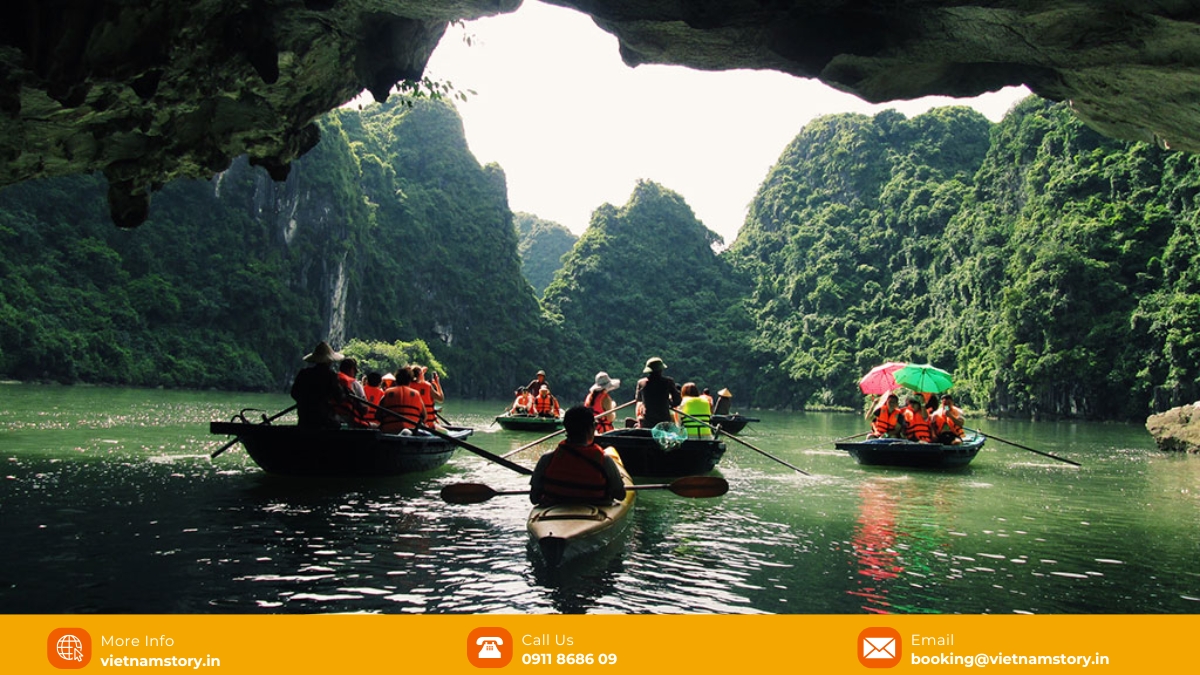
- The “sea-level” photo: Most people take photos from the top deck. Our tip? We arrange Kayaking at Luon Cave. You paddle through a low archway into a hidden lagoon surrounded by high walls. This lagoon is often inhabited by wild golden monkeys – perfect for a “National Geographic” moment.
- Sustainable travel: As of 2026, single-use plastics are strictly banned. We provide all our guests with reusable metal water bottles. Supporting the “Green Sails” initiative ensures the bay stays emerald for your children to visit one day.
Practical planning checklist for your Ha Long Bay expedition
Planning a trip to a world-famous site requires a bit of strategy to avoid the crowds and the heat. While Ha Long is famous for its beauty year-round, the “Goldilocks” seasons of Spring and Autumn provide the best weather and water clarity for your cruise.
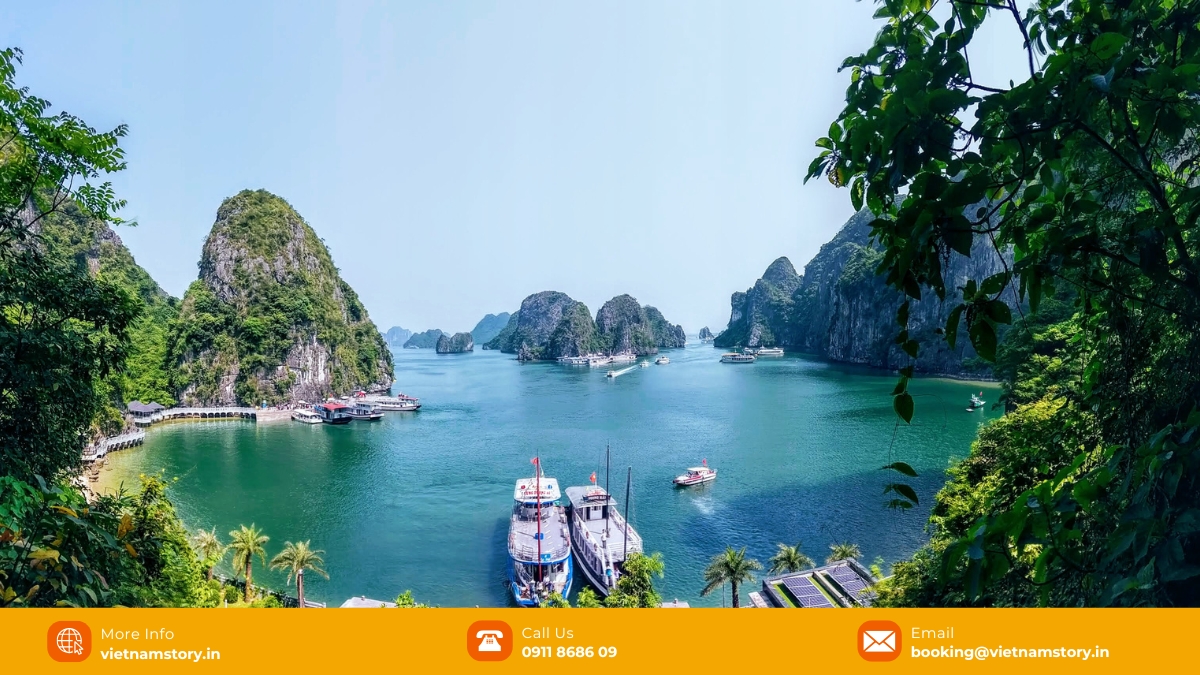
- The “goldilocks” season: September to October is my personal favorite. The temperatures are a pleasant 25-30°C, the skies are deep blue, and the humidity is lower than in the summer.
- March – April (Spring clarity): This is the best time for photography, as the morning mist often creates a “mystical” look over the islands before clearing into a bright afternoon.
- Travel time: Forget the long 4-hour bumpy rides of the past. Via the modern expressway, it is now only a 2-hour drive from Hanoi.
- Duration: While day trips are possible, a 2-Day/1-Night trip is the gold standard. If you truly want to reach the “untouched” core of the bay where the water is clearest, a 3-Day/2-Night itinerary is essential.
To truly experience everything the “Bay of the Descending Dragon” is famous for without the stress of logistics, I invite you to explore our curated Halong Bay Cruise Collections. At Vietnam Story, we have hand-selected only those vessels that meet our high standards for Indian hospitality—featuring dedicated culinary teams proficient in Vegetarian and Jain menus, spacious family-friendly cabins, and itineraries that strategically avoid the heaviest 2026 tourist crowds. Whether you are looking for a high-octane adventure with kayaking or a quiet, luxury escape for your honeymoon, our team ensures that your journey through this maritime maze is as seamless and magical as the legends themselves.
Conclusion
So, what is Halong Bay famous for? It is famous for the way it makes you feel – small, inspired, and connected to nature. Whether you are standing on the peak of Titov Island looking at the sunset, or sitting on your private balcony with a cup of tea as the limestone giants glide past, Ha Long Bay offers a sense of peace that stays with you long after you return to the busy streets of India.
At Vietnamstory, we are ready to welcome you. We have the vegetarian food ready, the best cabins reserved, and the dragon legends waiting to be told. Come and see for yourself why this bay is the pride of Vietnam.
Top Halong Bay Tours You’ll Love


Vietnam Highlights 7 Days: From Hanoi to Phu Quoc
Hanoi - Halong bay - Da Nang - Hoi an ancient town - Phu Quoc


8 Days Vietnam Journey: Culture, Heritage & Natural Wonders


Hanoi - Halong - Sung Sot - Titop - Luon Cave - Hanoi


Serenity Grandeur Cat ba cruise
Lan Ha Bay - Cat Ba - Cai Beo Floating Village - Viet Hai Village - Turtle Island - Tai Keo Cave


Hanoi - Lan Ha Bay - Dark And Bright Cave - Hanoi