
Han Market is most useful if you want an easy, central place to compare souvenirs, packaged food gifts, clothing, fabric and tailoring in about 1–2 hours. It is not automatically the cheapest market in Da Nang, and it is not the market we would choose purely for local street food. Go for convenience and shopping; choose Con Market when food and a more local market rhythm matter more.

Han Market quick facts for 2026
| Vietnamese name | Chợ Hàn |
| Address | 119 Trần Phú, Hải Châu Ward, Da Nang |
| Published reference hours | 06:00–19:00 daily; individual stalls can open later or close earlier |
| Useful visit time | About 1–2 hours for normal browsing; longer if ordering tailored clothing |
| Best for | Souvenirs, packaged snacks, dried goods, fabric, clothing and tailoring |
| Entry | No market admission ticket is normally required |
The market sits close to the Han River in the city centre, so it is easy to combine with nearby central Da Nang stops. We would plan a daytime visit rather than arrive near closing time, because the market building may still be open while individual stalls are already packing up.
Is Han Market worth visiting?
| Han Market makes sense when | We would skip or shorten it when |
|---|---|
| You want souvenirs and food gifts in one central stop. | You dislike crowded indoor markets or strong food smells. |
| You want to compare fabric, ready-made clothes or simple tailoring. | You mainly want the widest local-food experience; Con Market is usually more relevant. |
| Your hotel or sightseeing route already passes central Da Nang. | You would make a long cross-city trip only to buy generic packaged products available elsewhere. |
| You enjoy comparing stalls and negotiating when appropriate. | You strongly prefer fixed-price retail and air conditioning; a supermarket or mall may be easier. |
What is on each floor?

Ground floor: food gifts, dried goods, produce and food stalls
Downstairs is where most travellers shop for edible gifts: dried fruit, coffee, tea, cashews, crackers, sweets, dried seafood, sauces and other packaged regional products. Fresh produce and wet-market sections are also part of the building, along with food counters.
For gifts going into checked luggage, we would favour factory-sealed or clearly labelled products with ingredients and expiry dates over loosely packed foods. That makes it easier to check airline and destination-country rules before travel.
Upper floor: clothes, bags, fabric and tailoring
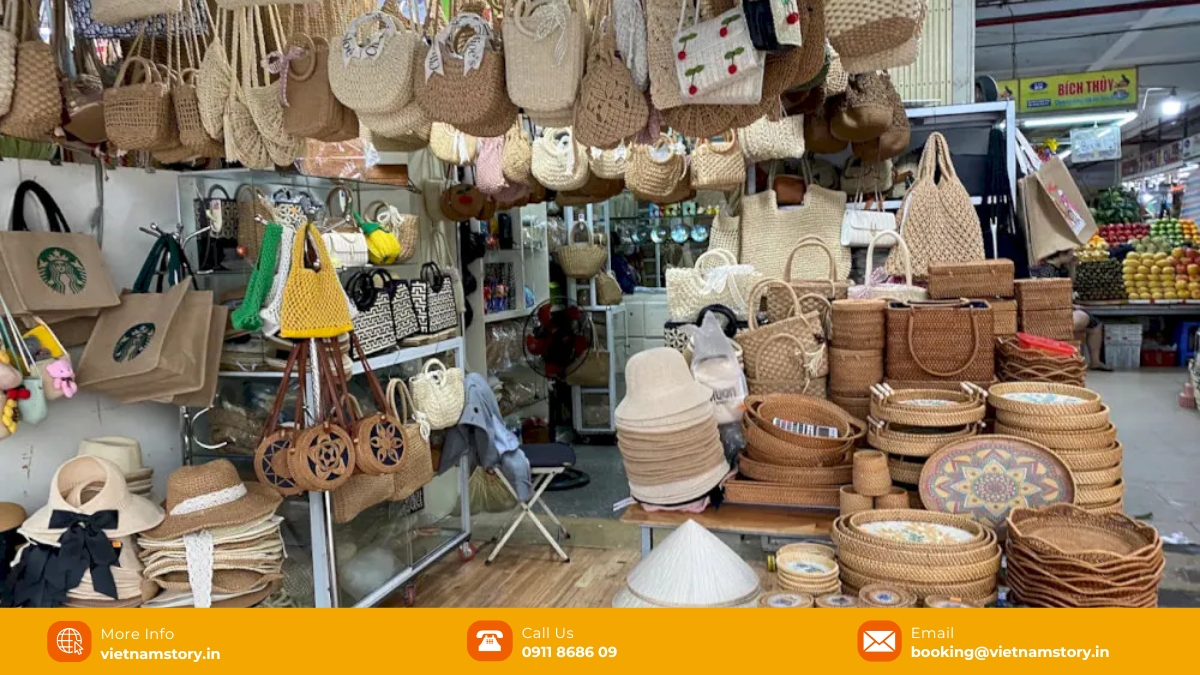
You will find ready-made clothing, shoes, bags, fabric and tailoring services upstairs. If you want an áo dài or another made-to-measure item, agree the fabric, design, total price, fitting or collection time and alteration process before paying a deposit.
Do not treat a traditional-market setting as proof that every bag, textile or craft is handmade in Da Nang. If local origin matters to you, ask what the material is and where the item was made. If the product carries a famous international brand at an unusually low price, do not assume authenticity.
What should you buy at Han Market?
| Category | Good choice when | Check before buying |
|---|---|---|
| Dried fruit, nuts, sweets | You want compact gifts that travel easily. | Seal, ingredients, expiry date and price versus supermarkets. |
| Vietnamese coffee or tea | You know the roast/style the recipient likes. | Brand, roast, ground/whole bean and package date. |
| Rice crackers and packaged snacks | You need inexpensive gifts for several people. | Packaging condition and ingredient list. |
| Rattan-style bags and small gifts | You want lightweight, easy-to-pack souvenirs. | Stitching, handles, material and whether “handmade/local” is actually stated. |
| Fabric or áo dài | You have time for fitting and alterations. | Fabric type, measurement, deadline, total price and final fit. |
| Dried seafood / fish sauce | You specifically want the product and know you can legally carry/import it. | Airline rules, checked-baggage restrictions, packaging and Indian customs/import requirements. |
For a broader comparison of gifts — including what is easier to pack and what may be better bought from supermarkets or specialist shops — use our Da Nang souvenirs guide. Han Market should own the experience of shopping at this specific market, not every souvenir question in the city.
Should Indian travellers buy dried seafood or fish sauce to take home?
Only after checking the rules that apply to your actual journey. Vacuum sealing helps with leakage and smell, but vacuum sealing does not make an animal-based or liquid product automatically acceptable for airline baggage or entry into India.
Before buying dried fish, shrimp, meat products, fresh produce, seeds, fish sauce or strongly scented liquids, check your airline’s baggage conditions and the current Indian customs/import rules for the product category. If you do not want that uncertainty, packaged coffee, tea, nuts, dried fruit, sweets and non-food souvenirs are usually simpler choices.
How should you bargain at Han Market?
Bargaining can be normal at some clothing, souvenir and tourist-facing stalls, but it is not a rule that every first price is a “tourist price” or that you should always offer 50%. City market rules increasingly emphasise posted prices and transparent selling, while actual practice can still vary by stall and product.
- Look for a posted price first. If a price is clearly fixed, do not force a negotiation.
- Compare two or three stalls for common products. This gives you a better reference than an arbitrary “offer half” formula.
- Confirm the unit. Dried food may be priced per kilogram, per 100 g, per pack or per box.
- Agree before the service starts. This matters especially for tailoring, alterations or custom work.
- If the price does not work, leave politely. You do not need to turn bargaining into a confrontation.
This also keeps the advice consistent with our Da Nang etiquette guide: bargaining is situational, not a cultural performance visitors are required to perform.
Cash, cards and paying in VND
Vietnamese dong is the practical currency for small market purchases. Some vendors may offer other payment methods, but you should not plan the visit on the assumption that every stall accepts an international card.
Carry smaller VND notes, count your change before leaving the stall and ask the seller to type or write the amount if spoken numbers are unclear. For where to withdraw or exchange money, use our Da Nang currency exchange guide rather than treating Han Market itself as an exchange destination.
What can you eat at Han Market?
The food area can be useful for a quick local meal or snack, but we would not call it a mandatory food stop. Depending on the stalls operating that day, you may find noodle dishes, bánh xèo, grilled items, desserts, fruit and drinks.
Menus and prices change, so the old fixed figures in this article have been removed. If food is the main reason you are visiting a Da Nang market, compare Han with Con Market in our Da Nang markets guide. For a wider local-food route beyond markets, use the Da Nang street food guide.
Vegetarian, Jain and halal travellers should not assume a modified local dish is suitable
A fruit drink or dessert may look vegetarian, and a noodle dish may be offered without visible meat, but broth, fish sauce, shrimp paste, gelatin, egg or shared cooking equipment can still matter depending on your dietary rules.
For strict vegetarian/Jain requirements or halal dining, Han Market is better treated as a shopping stop than as a guaranteed meal solution. Use a dedicated option from our vegetarian restaurants guide, Indian restaurants guide or Da Nang halal food guide according to the actual requirement.
Han Market or Con Market: which should you choose?
| Choose Han Market when | Choose Con Market when |
|---|---|
| You want a central, easy first market visit. | You care more about food and local market activity. |
| Souvenirs, packaged gifts, clothes or tailoring are the priority. | You want a larger food-oriented browsing experience. |
| You are already near the Han River / central sightseeing zone. | You are willing to travel specifically for the market rather than combine it with riverfront sightseeing. |
You do not need both markets simply because both appear on a Da Nang checklist. Pick the one that matches what your group actually wants to buy or eat.
When is the best time to visit Han Market?
Early morning is useful if you want to see more of the fresh-food trade. For normal souvenir shopping, we would usually choose mid-morning or afternoon while the market is fully active. Avoid relying on the final hour if you have a specific purchase in mind because individual vendors may close before the building’s reference time.

How should Han Market fit into a Da Nang itinerary?
Han Market is easiest to add when your day already includes central Da Nang. We would not give it half a day unless you are ordering tailored clothing or genuinely enjoy market shopping.
If you are planning the whole city rather than one shopping stop, use our Da Nang tour routes for Indian travellers to decide where the market fits alongside the riverfront, museums, beaches and other Central Vietnam days.
Planning Da Nang with limited shopping time or a mixed-age family? Send your dates, hotel area and the places you already want to see. We can place one practical market stop into the route without turning the day into repeated cross-city transfers.
Han Market Da Nang FAQs
What time does Han Market open and close?
The current published reference commonly used for planning is 06:00–19:00 daily. Individual vendors may open later or close earlier, especially near the edges of the day or on holidays.
Is Han Market good for souvenirs?
Yes, especially for packaged snacks, coffee, dried fruit, small gifts, clothing, fabric and bags. Compare common products across stalls and check quality rather than assuming every item is handmade or locally produced.
Do you have to bargain at Han Market?
No. Bargaining can be appropriate at some stalls, but first check whether the price is posted or fixed. Comparing several stalls is more reliable than automatically offering half the asking price.
Which is better, Han Market or Con Market?
Han Market is generally easier for central sightseeing, souvenirs, clothing and tailoring. Con Market is usually the stronger choice when food and local market activity are the priority.